
Feldenkrais® Seattle
Pain has changed the way you move.
What used to be easy takes more effort.You can learn to move better.
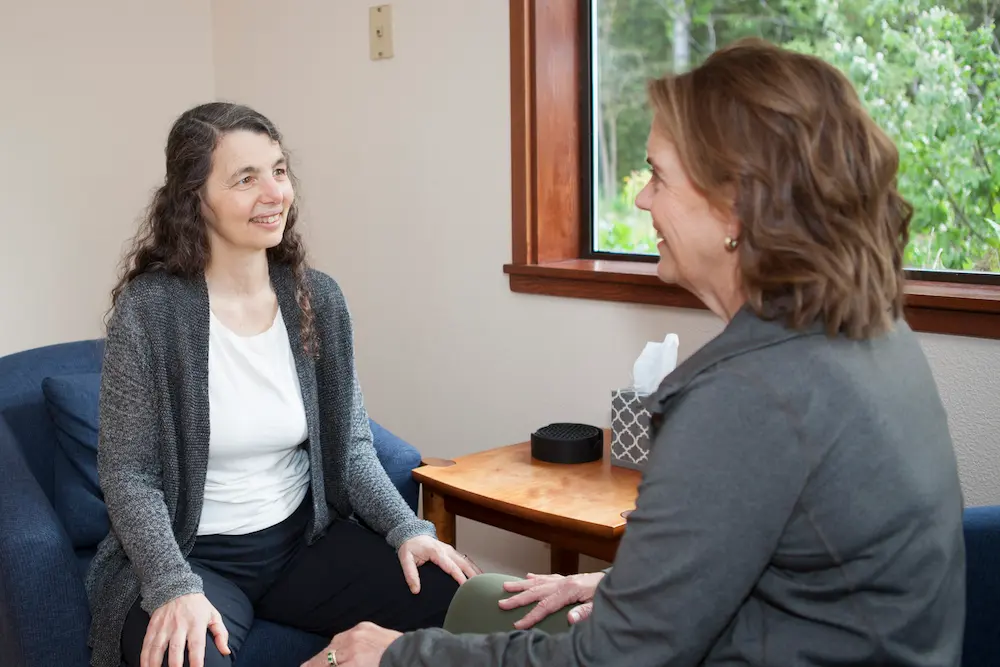
When something hurts, you protect it. You brace, avoid certain movements, shift the work somewhere else, or find another way to do what you need to do. Over time, these compensations become habits, even after they stop being useful.
Feldenkrais is movement education. You learn to notice how you’re moving and find other options, so movement gets easier and less strained.
55 minutes, in person in Kirkland. I’ll tell you whether I can help. No obligation.
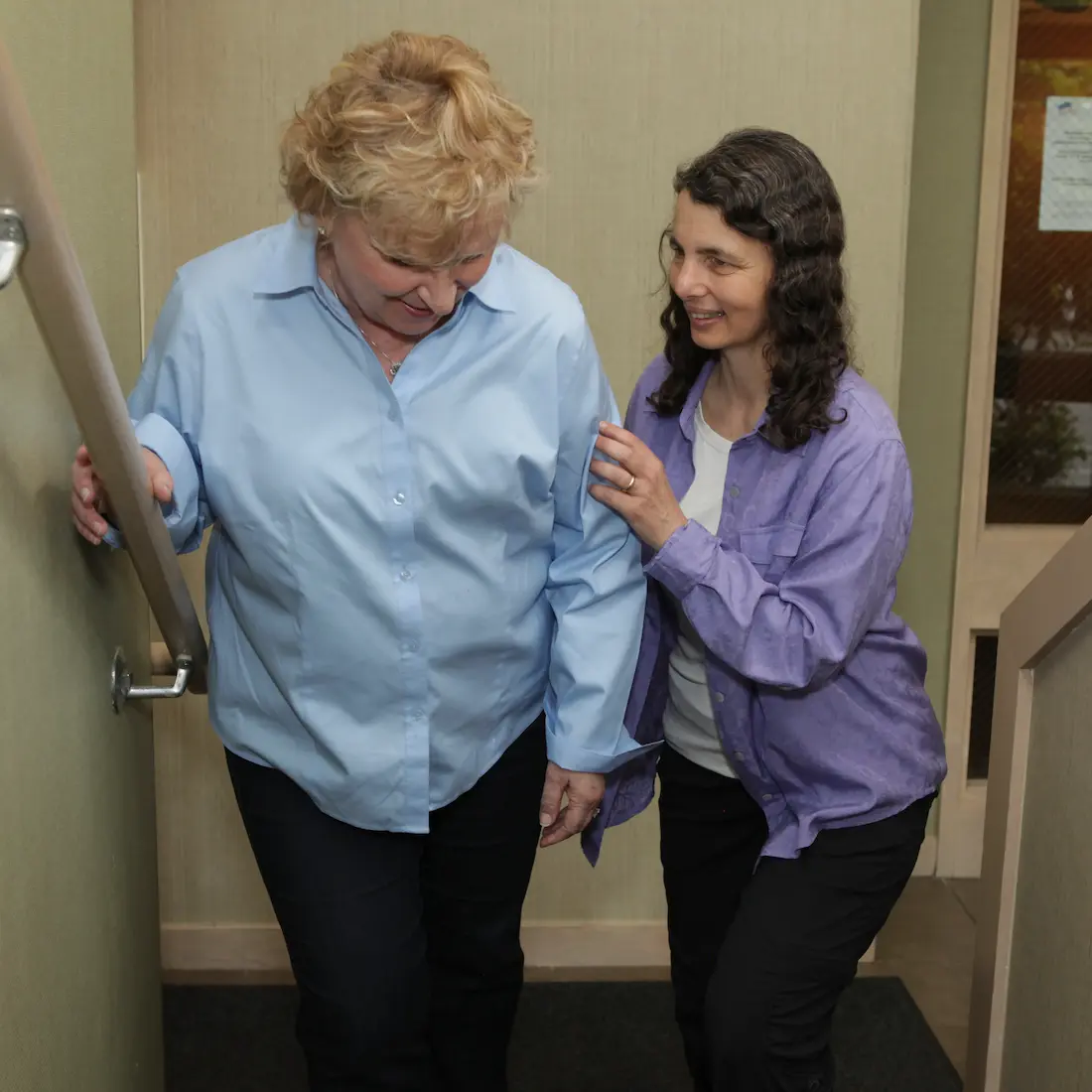
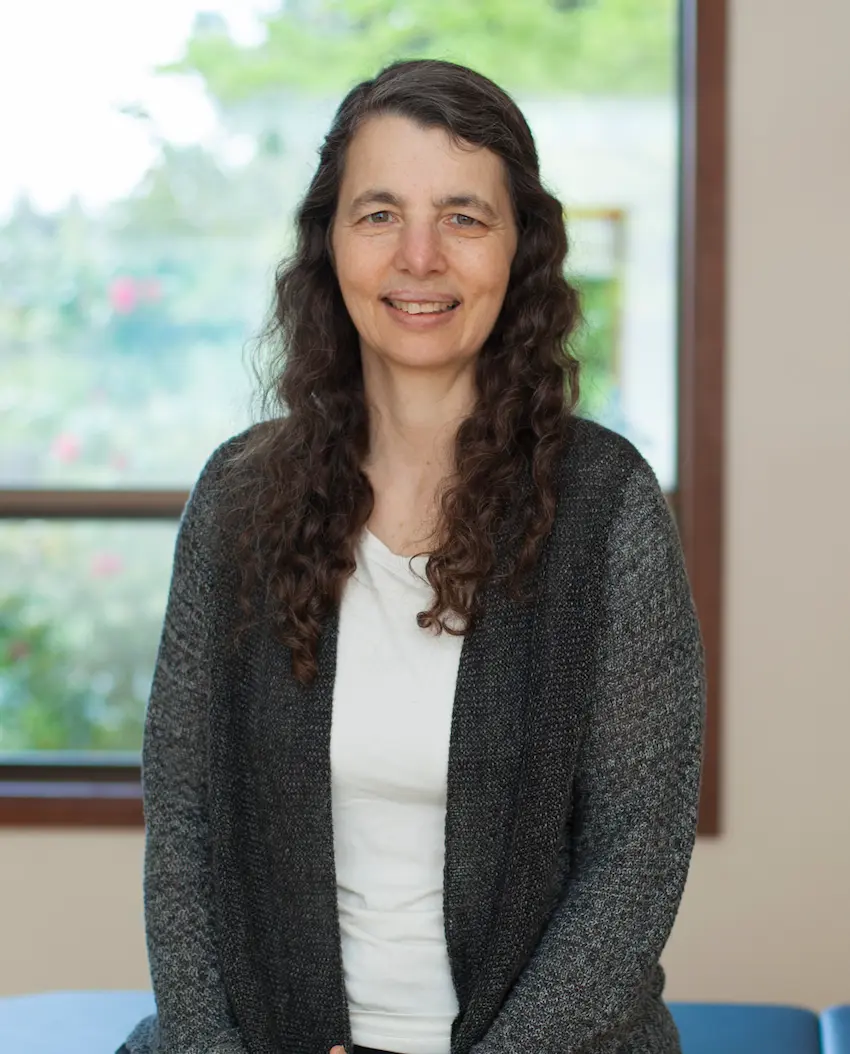
I’m Laura Yedwab, a Guild Certified Feldenkrais PractitionerCM (GCFP) since 2012. I work with people who want to move comfortably and enjoy the activities they love, but hurt doing ordinary things, e.g., sitting, walking, or climbing stairs. Many come to me after physical therapy, massage, chiropractic, or home exercises weren’t enough. My studio is in Kirkland, across Lake Washington from Seattle, with free parking and a garden.
A Seattle MD doing her PT exercises, still in pain
Kathy came to me with neck pain from old sports injuries, worried it would make going back to work as a doctor too hard. She’d stayed active and was doing her physical therapy exercises, but sitting, standing, and typing were all uncomfortable. We started with a better way to sit, then worked on standing, walking, reaching, and turning. At the end of our work together, she said:
“I am no longer concerned about my neck and am confident that if the pain does return, I have the tools I need. I am enjoying feeling comfortable and I no longer feel like I’m running just to stay in place. Several people who have known me for years have noticed the change. For example, recently a colleague said ‘You look really different,’ and then paused, trying to figure out what had changed. Finally, he said, ‘You look better than I have ever seen you! You look fabulous,’ and I thought, ‘Yes, I feel fabulous’.”
— Kathy
You can read Kathy’s full story, and five others on the success stories page.
Book a free consultation
Fifty-five minutes, in person at my Kirkland studio. We’ll talk about what you’d like to be able to do better and what you’ve tried so far. I’ll explain my approach. Then I’ll watch how you move. We’ll do some work together, so you get a taste of what a lesson is like.
At the end I’ll tell you whether I think I can help. Sometimes the answer is no, and I’ll say so.
Free, and there’s no obligation to book anything afterward.
If the calendar doesn’t load, use the booking page or email me at info@kineticinquiry.com.
Over 4,000 private lessons since 2012
I began my Feldenkrais training in Seattle and completed it in Jeff Haller’s Victoria II program. In the years since, giving over 4,000 lessons has taught me to look closely, experiment, and find what makes movement easier for the individual in front of me.
A brief summary of my training and experience:
- Guild Certified Feldenkrais Practitioner, from an 800-hour, four-year accredited program
- Over 1,500 hours of continuing Feldenkrais education
- Helped design and staffed the four-year Feldenkrais Training Academy in Seattle (2018–2022)
- Helped design the IOPS Academy, an 18-month advanced program for Feldenkrais practitioners, and staffed its first four programs (2015–2021)
- Master’s degree in computer science from MIT, and 20 years in technology, including eight at Microsoft
I can walk without pain! … I had not been able to walk or stand for long for over five years and had tried many, many therapies and treatments. I can now walk about half an hour at a medium pace. … I recently was able to do yardwork for over 3 hours, which involved walking in our lumpy grass, and my foot did great. … It is not a quick fix, but it is effective.
Jenelle D Vance
What is the Feldenkrais Method®?
In the Feldenkrais Method of movement education, you come in with something that hurts, and instead of working on the sore spot, we look at how you’re moving, why that might be causing the pain, and find better options. It’s learning, the same way a golf or violin lesson is learning.
Most of the time we move on autopilot. Our movement patterns were learned so early we don’t remember choosing them. For example, I often see people with sore necks who look left or right by only turning their neck. When I teach them to turn using their whole body, e.g., with their shoulders and hips participating, then their neck does less work and the strain eases.
Lifting an arm is similar. Many people raise their arm without letting their shoulder blade move, and their shoulder and neck end up working harder than they need to. I help people learn to let their shoulder blade and back take part, so their shoulder and neck do less.
As you notice your habits and learn better options, you become more skillful at moving.
Laura has a knack for asking questions of her clients (verbally and with touch) that lead them to discover abilities they do not know they have.
Jeff Haller, Ph.D., who has trained Feldenkrais practitioners since 1993
What happens in a session
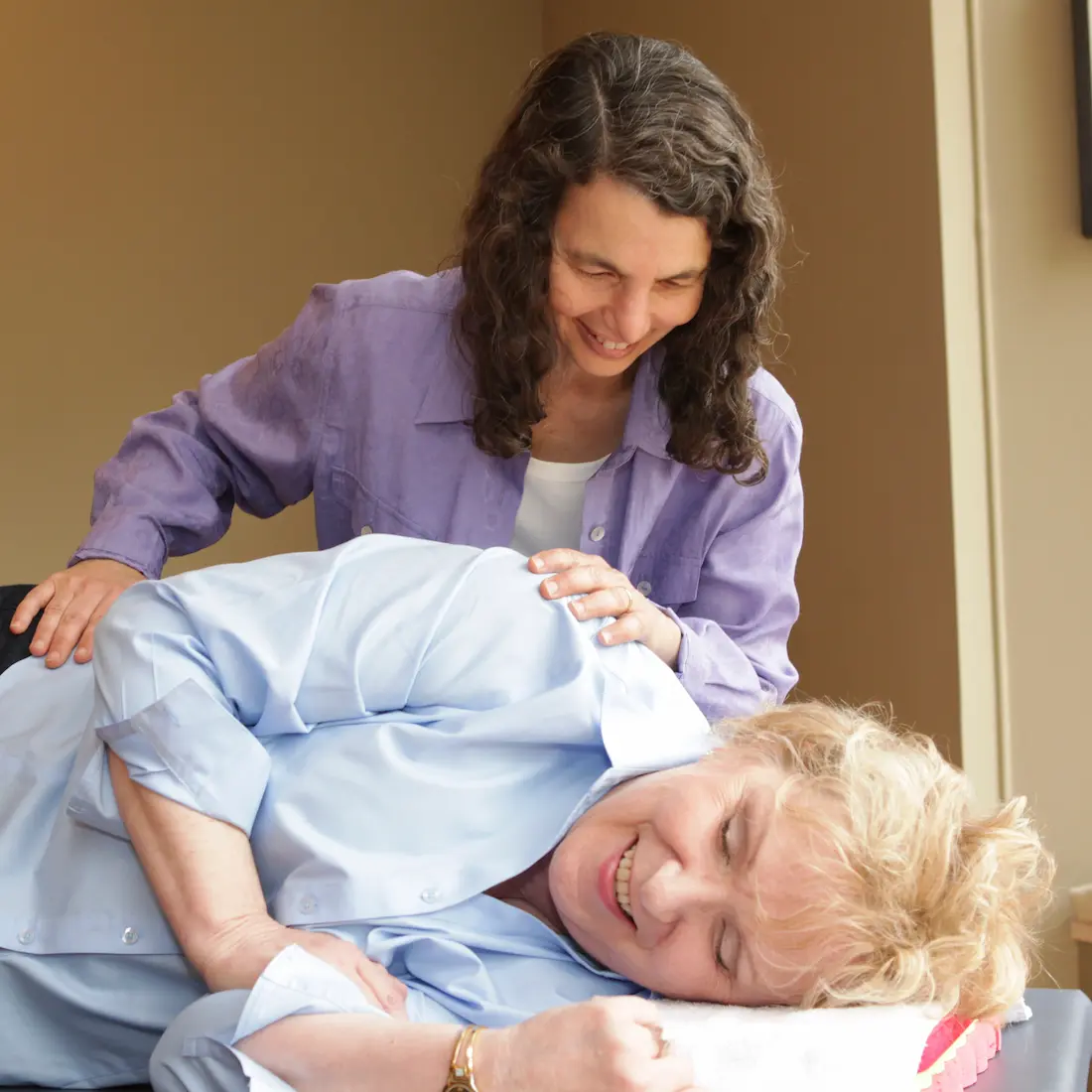
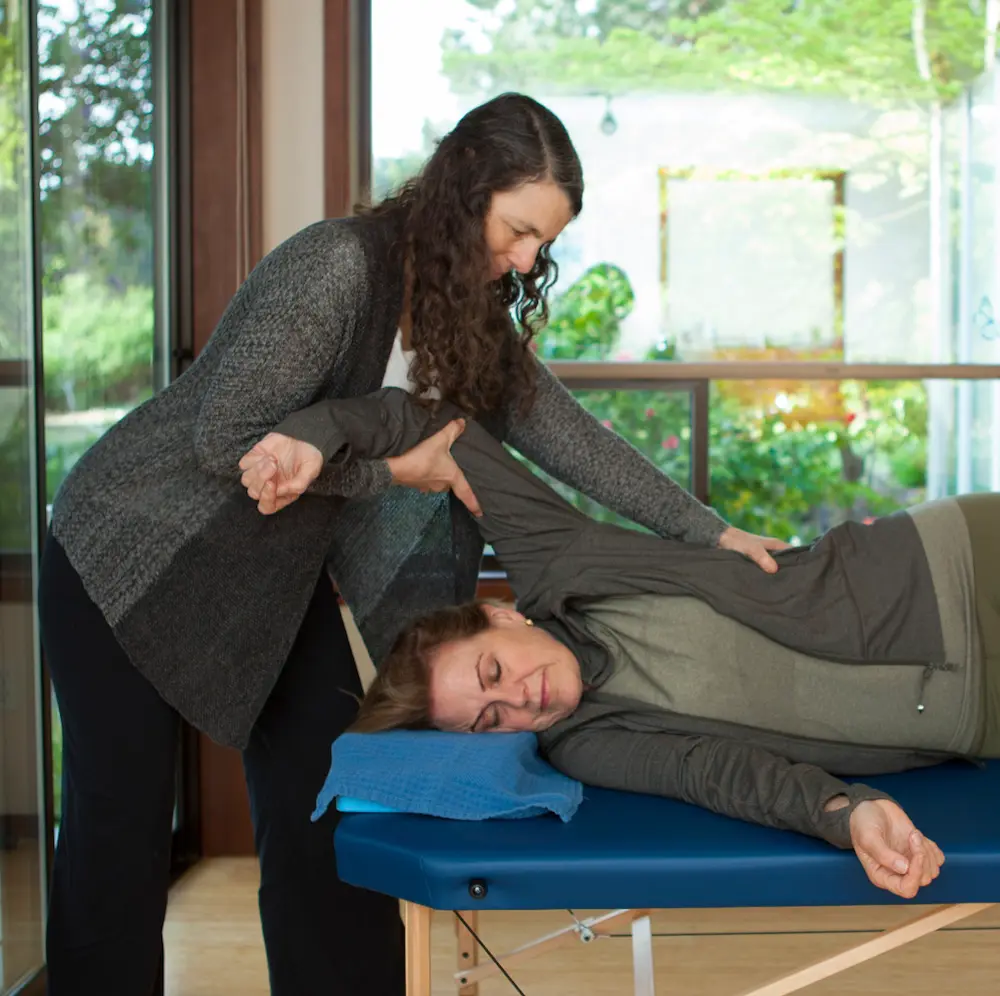
A session is a private movement lesson. It runs 55 minutes in my Kirkland studio, and you stay fully clothed. Most of the work happens lying on a low, padded table, though we sometimes work sitting or standing.
We start with what brought you in, e.g., a sore neck, a knee that complains on the stairs, or trouble getting down to the floor and back up. Then we look at a specific movement we could improve. With walking, I watch how you actually walk, e.g., whether you fall onto each step or come up onto your front leg, whether your glutes are working, and what your upper torso is doing.
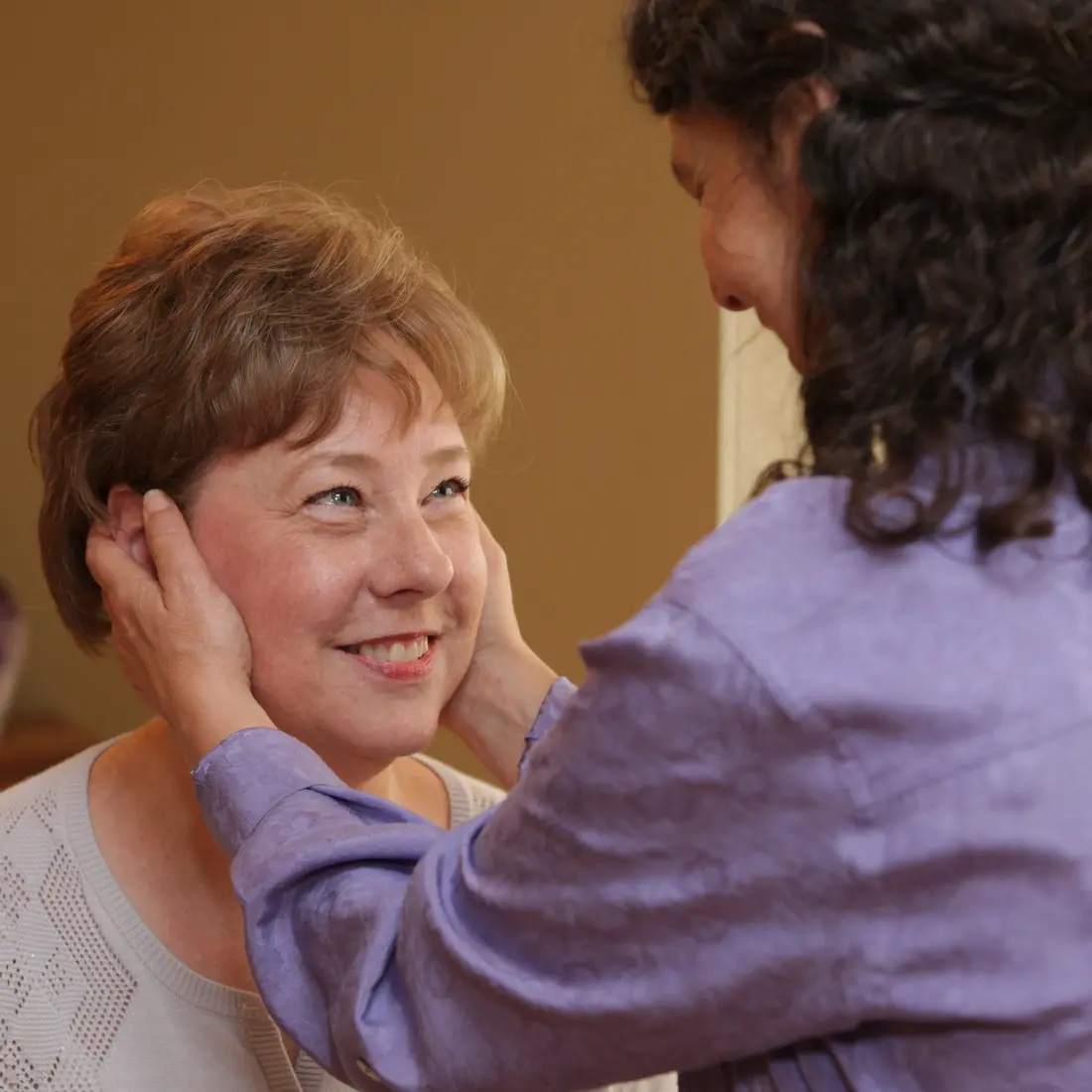
Lying on the table lets you relax, because you no longer have to work to stay upright. I use gentle touch to help you feel how you’re moving and find new options. For example, I might lift your leg with very little effort until I sense I’m up against something. I could lift it higher, but only with more effort. As I sense that, you can sense it too, and we both know where the restriction is.
Most people leave feeling lighter and more aware of how they’re carrying themselves.
Questions people ask before booking
Your studio is in Kirkland. Is that too far from Seattle?
My studio is in Kirkland, at 12810 NE 64th Street, across Lake Washington from Seattle. My clients drive from Seattle, Bellevue, Lynnwood, Redmond, and towns further out, some over an hour each way. They make the drive because the work is hands-on and only happens in person. If the distance is the thing giving you pause, start with the free consultation and decide afterward whether the trip is worth it to you. For directions and parking, see the contact page.
Will a lesson hurt, or be too difficult for me?
It shouldn’t. My work is as far away from the “no pain, no gain” philosophy as one can be. The process of learning to move with ease and comfort requires us to always be in ease and comfort. We start with movements you can do easily and build from there, and we never push past what’s comfortable. The table is low, and if lying down is hard for you, we can work sitting or standing.
What conditions can Feldenkrais help with?
Conditions where movement is part of the problem. If your back hurts more after sitting at a computer, standing at the sink, picking up groceries, or working in the garden, then the way you move may be putting unnecessary strain on it, and that is something you can learn to change. Sitting counts as a movement here. The same goes for knee pain on the stairs or a neck that stiffens when you drive. You can read about clients with back, knee, neck, and Achilles pain on the success stories page.
Should I see a doctor first?
If there’s any sign the problem is medical rather than a movement pattern, then you should see a doctor. Feldenkrais doesn’t replace a diagnosis or medical treatment. Once a doctor has checked it, we can look at how you move, and see whether improving it will help you.
Can I do Feldenkrais alongside physical therapy?
Yes. Many of my clients do both, and I’d encourage you to do PT if you find it helpful. Old movement habits run on autopilot, so they often show up inside the PT exercises themselves. Glute bridges are a common example. They are meant to strengthen the glutes, but people often push down through their heels so the quads do the lifting, and the glutes stay quiet. That’s hard to feel from the inside. My part is helping you notice it, so the exercise your physical therapist gave you can do what it’s meant to do. See Feldenkrais Therapy for more details.
What happens in the free consultation?
We start by talking about what you’d like to be able to do better and what you’ve tried so far, and I explain how I work. Then we spend 10 to 20 minutes on a low, padded table, so you get a taste of what a lesson is like. If we both think it’s a fit, we talk about scheduling and packages.
How many sessions will I need?
You’ll learn something about how you move in every lesson. There’s no fixed program or minimum commitment. Sessions are usually once a week, though we can adjust that to fit your schedule. Some people come in with one specific thing, like back pain or neck pain, and find that a package or two is enough. Others keep coming because they find that refining how they move keeps paying off. We’ll sort out what makes sense for you.
Does insurance cover Feldenkrais?
Usually not. Insurance is built around a diagnosed condition and a plan to treat it. Feldenkrais is movement education, not medical treatment, so most plans don’t cover it the way they cover physical therapy. If coverage matters to you, check with your plan before you book.
How much does a session cost?
A private session is $200. A package of five sessions is $800, which works out to $160 a session. The consultation is free, and there’s no obligation to book anything afterward. See sessions and packages for details.
You don’t have to decide anything from a web page. Come and feel what a lesson is like.
Book a free consultation55 minutes, in person in Kirkland. I’ll tell you whether I can help. No obligation.