
Feldenkrais® Therapy
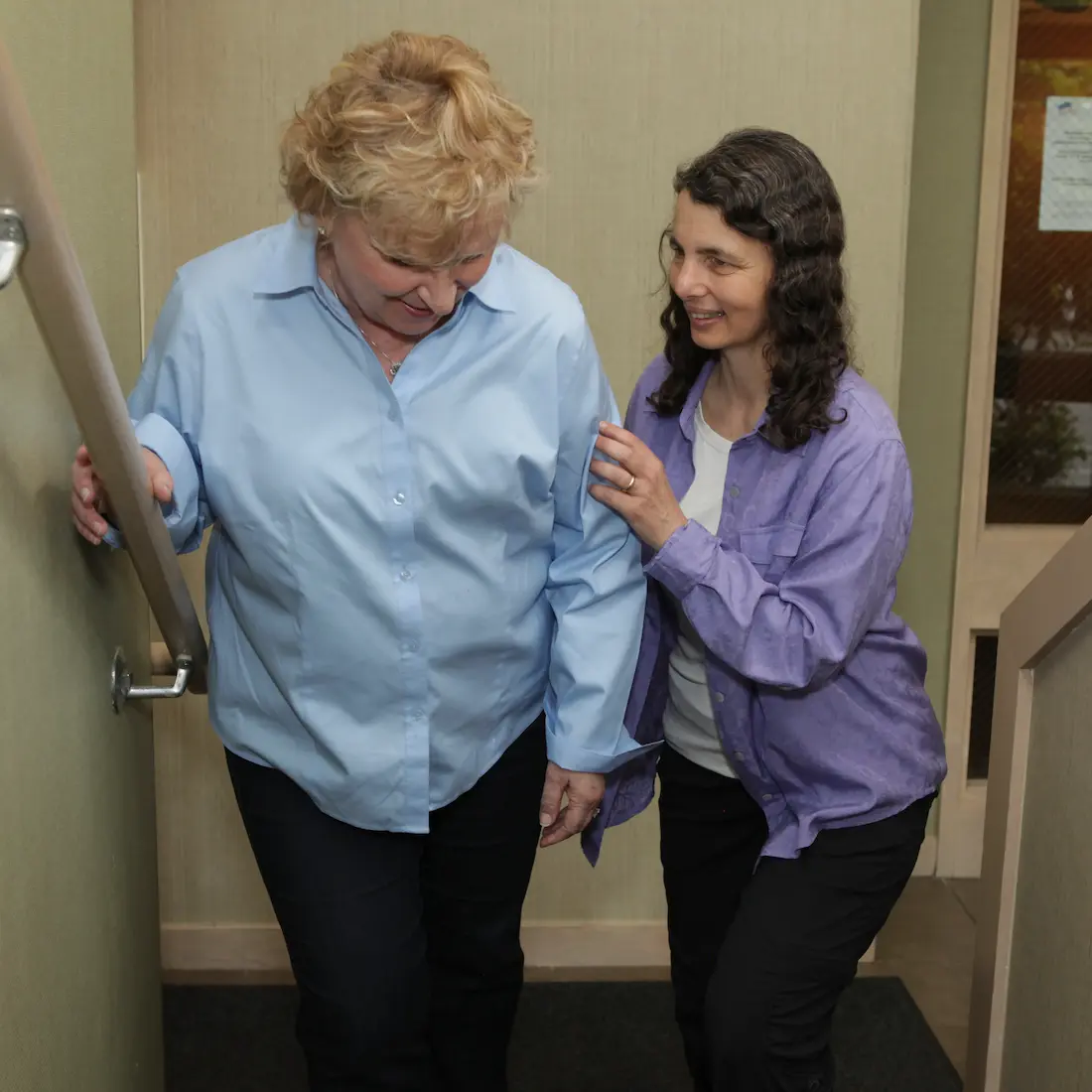
Feldenkrais therapy in Kirkland when pain limits how you move
Many people come to me with pain that is limiting what they can do. They usually come after trying physical therapy, massage, chiropractic, yoga, Pilates, or exercises on their own. They may have gotten some relief, but the pain returned, or one part of the body improved while another part started to hurt. I’ve been a Guild Certified Feldenkrais PractitionerCM since 2012. I can teach you ways of moving that spread the work, so the part that’s been overworking does less, and usually hurts less.
55 minutes, in person in Kirkland. I’ll tell you whether I can help. No obligation.
V. broke her back three times and was afraid of the years ahead
V. came to me after breaking her back three times, in pain and afraid of what the years ahead would hold. After a couple of months of Feldenkrais lessons, she noticed significant changes:
“I no longer had pain when I walked. I went on a hike and it was longer than I wanted (like seven hours). My legs were a bit sore, but it was only when I got back to the car, did I think, ‘Holy Cow, I just walked for seven hours.’”
What surprised her most was how much less afraid she felt:
“There used to be so much fear about what was going to happen. If I was in so much pain at 40, what would my life be like at 60? That psychological issue is now gone. Feldenkrais was like having the sun come out.”
How much and how quickly the change occurs is different for everyone. But it’s common for people to find they can do things they’d given up on. You can read V.’s full story, and five others on the success stories page.

Book a free consultation
Fifty-five minutes, in person at my Kirkland studio. We’ll talk about what you’d like to be able to do better and what you’ve tried so far. I’ll explain my approach. Then I’ll watch how you move. We’ll do some work together, so you get a taste of what a lesson is like.
At the end I’ll tell you whether I think I can help. Sometimes the answer is no, and I’ll say so.
Free, and there’s no obligation to book anything afterward.
If the calendar doesn’t load, use the booking page or email me at info@kineticinquiry.com.
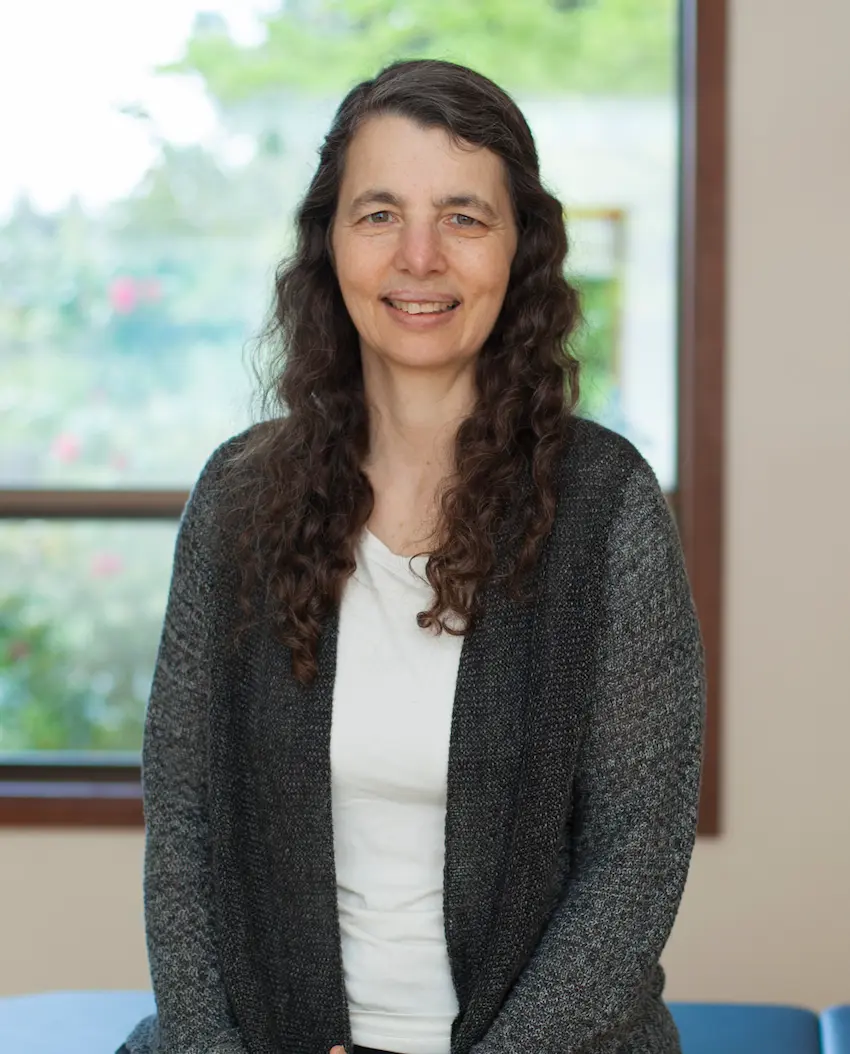
Over 4,000 private lessons since 2012
I am Laura Yedwab, and I work with clients in person at my studio in Kirkland, WA.
- Guild Certified Feldenkrais Practitioner, from an 800-hour, four-year accredited program
- Over 1,500 hours of continuing Feldenkrais education
- Helped design and staffed the four-year Feldenkrais Training Academy in Seattle (2018–2022)
- Helped design the IOPS Academy, an 18-month advanced program for Feldenkrais practitioners, and staffed its first four programs (2015–2021)
- Master’s degree in computer science from MIT, and 20 years in technology, including eight at Microsoft
What is Feldenkrais therapy?
People often use the phrase “Feldenkrais therapy” when they are searching for the Feldenkrais Method®. The Feldenkrais Method of movement education is a way to study how you move, notice habits that are hard to feel from the inside, and learn other options. For example, I often see people who don’t use their glutes enough in walking and thus overuse their ankles or hip flexors. Once you can feel your habit, you can begin to change it.
Feldenkrais is not medical treatment. I won’t diagnose you or treat a condition. If you are experiencing unexplained pain, please see your doctor first to rule out any serious medical issues.
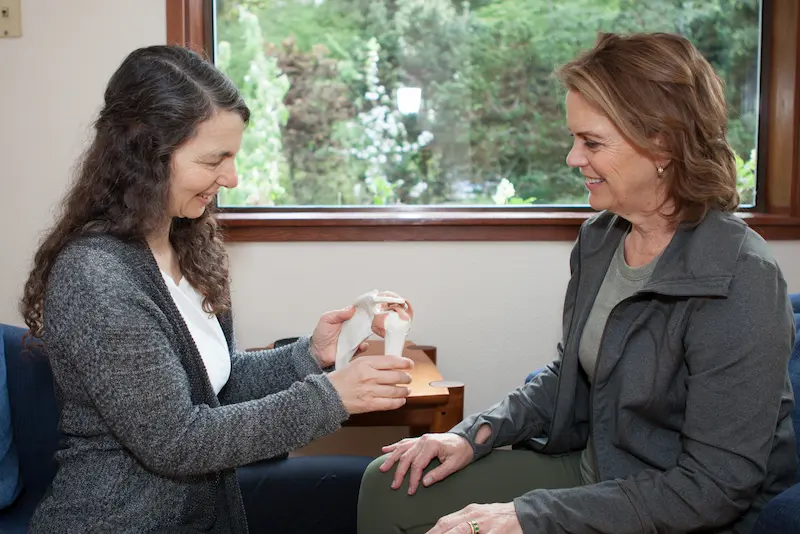
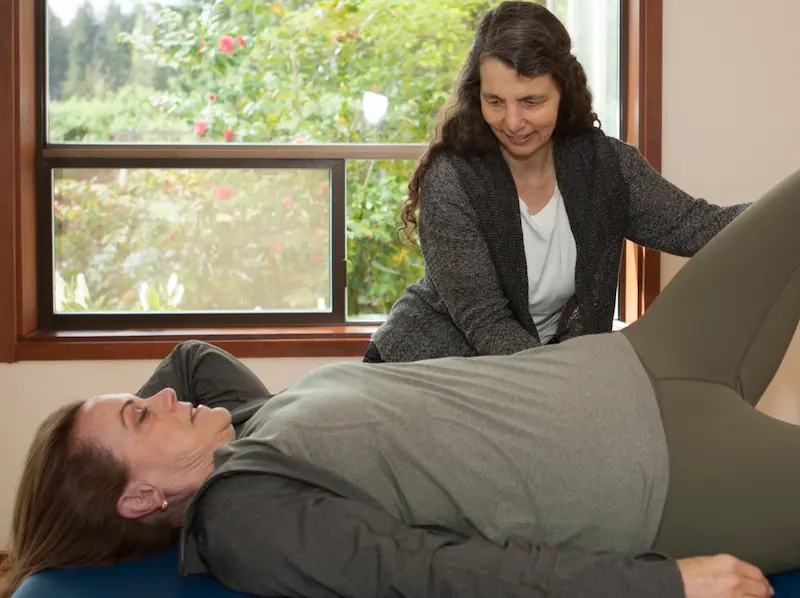
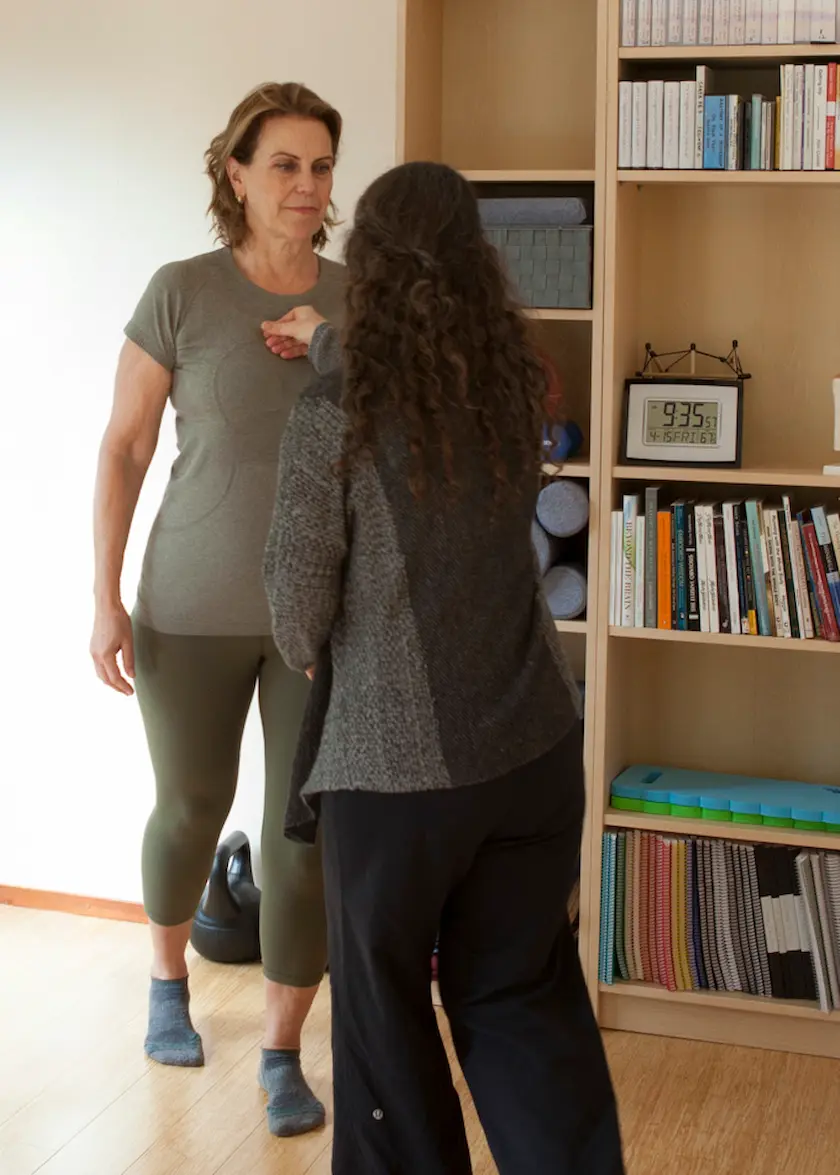
In a private Feldenkrais session, called a Functional Integration® lesson, you stay fully clothed. I use gentle touch and movement to help you feel how your whole body takes part in ordinary actions, e.g., sitting, turning, reaching, walking, climbing stairs, or getting in and out of the car. The lessons are often surprisingly fun.
Many clients come to me wanting to return to how they moved before the pain, but that way of moving is often what led to it. My goal is to set you on a path of continuing improvement, which has no limit.
“Improvement” is a gradual bettering which has no limit. “Cure” is a return to the previously enjoyed state of activity which need not have been excellent or even good.
Moshé Feldenkrais, The Case of Nora
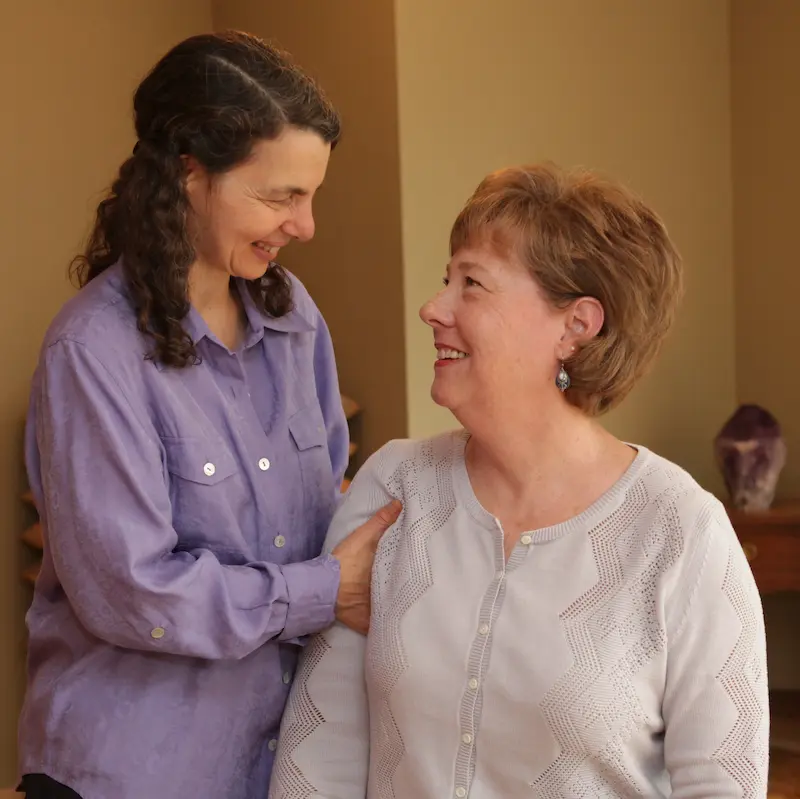
What happens in a private Feldenkrais session
We closely examine the movements that are causing you problems. Two people can come in with the same sore knee and need completely different lessons, because they got there by moving in different ways. If reaching is painful, we might look at how your shoulder blade takes part in the movement. If walking hurts, we might look at how your weight transfers from your back leg to your front leg.
We’re improving how you organize your whole self as you move. As the movement improves, there’s often less strain on the part that hurts.
How is Feldenkrais therapy different from physical therapy, massage, chiropractic, yoga, and Pilates?
Each of these works on the body directly, e.g., by building strength where it’s weak, loosening tight tissue, or correcting your alignment. Sometimes one of them is just what you need. But these approaches often don’t change your underlying habit, i.e., the way you move that puts the strain there to begin with. And when you layer a strengthening exercise on top of that unchanged pattern, repeating it can sometimes drive the pattern deeper and leave you hurting more.
I see this all the time. For example, Kate, an executive coach who was committed to her fitness, came to me with constant pain in her Achilles tendon. Her personal trainer and her doctor mostly suggested changing her shoes. She did, again and again, and it made no difference. The problem was how she moved. After we worked on that, she finished a ten-day trek without the Achilles pain. You can read Kate’s full story.

Why everyday movement habits can change
Anything we learned to do, we can improve. People do this all the time for sports and music, e.g., golf lessons, tennis coaching, or years at the piano. We rarely take that same approach to the movements we use every day, like walking and bending, because we learned them so early that we don’t remember learning them at all.
As a baby, you worked out how to roll over, sit up, reach, and finally walk. Once each pattern was good enough, you stopped thinking about it and went on to the next thing. Those early solutions became the defaults you still use today.
They may have served you well for years. But your body and your life have changed. After an injury, long days at a desk, or simply getting older, some of those defaults may ask too much of one part of you, and you begin to feel it as pain.
What people often notice after Feldenkrais lessons
Most people come to me focused on one stubborn pain. What tends to surprise them is how much better their life gets.
Movement is in everything we do, e.g., getting out of bed, reaching a high shelf, turning to check traffic, or typing at a computer. It is also part of every breath, every word we speak, and every gesture.
As moving takes less effort, people notice the difference in ordinary things. One client said walking got so easy it almost felt like cheating. Another client noticed they were no longer bracing themselves before climbing the stairs to go to bed at night.
Questions people ask before booking
What conditions can Feldenkrais help with?
Conditions where movement is part of the problem. If your back hurts more after sitting at a computer, standing at the sink, picking up groceries, or working in the garden, then the way you move may be putting unnecessary strain on it, and that is something you can learn to change. Sitting counts as a movement here. The same goes for knee pain on the stairs or a neck that stiffens when you drive. You can read about clients with back, knee, neck, and Achilles pain on the success stories page.
Should I see a doctor first?
If there’s any sign the problem is medical rather than a movement pattern, then you should see a doctor. Feldenkrais doesn’t replace a diagnosis or medical treatment. Once a doctor has checked it, we can look at how you move, and see whether improving it will help you.
Will a lesson hurt, or be too difficult for me?
It shouldn’t. My work is as far away from the “no pain, no gain” philosophy as one can be. The process of learning to move with ease and comfort requires us to always be in ease and comfort. We start with movements you can do easily and build from there, and we never push past what’s comfortable. The table is low, and if lying down is hard for you, we can work sitting or standing.
Can I do Feldenkrais alongside physical therapy?
Yes. Many of my clients do both, and I’d encourage you to do PT if you find it helpful. Old movement habits run on autopilot, so they often show up inside the PT exercises themselves. Glute bridges are a common example. They are meant to strengthen the glutes, but people often push down through their heels so the quads do the lifting, and the glutes stay quiet. That’s hard to feel from the inside. My part is helping you notice it, so the exercise your physical therapist gave you can do what it’s meant to do.
Does Feldenkrais really work?
There isn’t much research, and the trials are small. A recent independent review, done by Cochrane Australia for the Australian government in 2024, found 10 small trials, most with fewer than 55 people, and rated the evidence on pain and physical function as very uncertain. In my practice, I’ve seen clients get back to hiking, climbing stairs, and working full time, and some of them tell their stories on the success stories page. The free consultation is where you can find out for yourself. At the end, I’ll tell you whether I think I can help.
How soon will I notice a difference?
Most people feel something change for the better in the first session. Joan did: “After the first time there was already a change in the way I walked.” Some people take longer. Zeke, a runner, found his first few sessions frustrating, and says “it was only after session 5 or 6 that things started to click.”
Think of this as you would piano lessons or tennis lessons, except that we work on movements you learned so early they now feel instinctive, e.g., sitting, reaching, and walking. My goal is that you walk away from the first session knowing more and being able to use it. As with piano or tennis, it takes time before the new way of moving becomes your own. Read Joan’s and Zeke’s stories.
How many sessions will I need?
You’ll learn something about how you move in every lesson. There’s no fixed program or minimum commitment. Sessions are usually once a week, though we can adjust that to fit your schedule. Some people come in with one specific thing, like back pain or neck pain, and find that a package or two is enough. Others keep coming because they find that refining how they move keeps paying off. We’ll sort out what makes sense for you.
Does insurance cover Feldenkrais?
Usually not. Insurance is built around a diagnosed condition and a plan to treat it. Feldenkrais is movement education, not medical treatment, so most plans don’t cover it the way they cover physical therapy. If coverage matters to you, check with your plan before you book.
How much does a session cost?
A private session is $200. A package of five sessions is $800, which works out to $160 a session. The consultation is free, and there’s no obligation to book anything afterward. See sessions and packages for details.
See if Feldenkrais therapy is a fit for you
By the time clients reach me, many have started avoiding things they used to love, e.g., walking, hiking, gardening, or getting down on the floor with the grandkids. Doing them now means risking more pain or another injury. The free consultation is a simple way to see whether this kind of movement education makes sense for you.
In the consultation, we’ll talk about what’s been getting in your way, I’ll look at how you move, and we’ll do some work together, so you can feel what a lesson is like.
55 minutes, in person in Kirkland. I’ll tell you whether I can help. No obligation.